
Resources
What Is Pyrolysis?
Technology Advantage

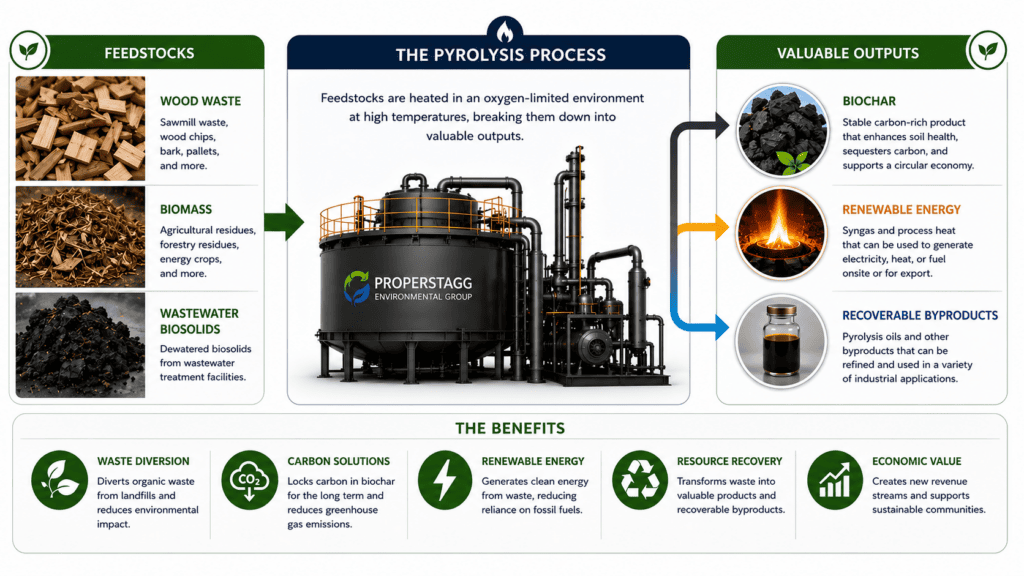
ProperStagg’s technology platform combines advanced waste conversion, renewable energy recovery, and carbon removal capabilities into a scalable environmental infrastructure solution. Our approach is designed to transform challenging waste streams—including wood waste, biomass, and wastewater biosolids—into valuable resources such as biochar, renewable energy, and durable carbon storage.
Unlike traditional waste management approaches, ProperStagg’s systems are designed to recover value from materials that would otherwise create disposal challenges. By integrating proven technologies with thoughtful project design and community-focused implementation, we create solutions that deliver environmental benefits, operational value, and long-term economic opportunities.
Efficiency & Cleanliness
Pyrolysis provides an efficient, controlled approach to managing organic waste streams by converting materials such as wood waste, biomass, and wastewater biosolids into valuable resources, including biochar, renewable energy, and recoverable byproducts.
Unlike traditional disposal methods such as open burning or landfilling, advanced pyrolysis systems operate in a controlled, oxygen-limited environment designed to minimize emissions and maximize resource recovery. This closed-loop approach helps reduce waste accumulation, recover valuable materials, and support cleaner, more sustainable waste management practices.
Control & Safety
Advanced pyrolysis systems are designed for controlled, enclosed operation, providing a safe and efficient method for converting organic waste streams into valuable resources. By operating in an oxygen-limited environment, the process helps minimize unwanted byproducts while allowing for the recovery and management of gases, heat, and carbon-rich materials.
ProperStagg’s approach emphasizes operational control, environmental compliance, and responsible resource management through integrated monitoring and emission management systems. This allows communities and partners to confidently adopt innovative waste conversion solutions with a focus on safety, reliability, and sustainability.
High-Quality Energy Recovery
The pyrolysis process converts organic materials into valuable energy resources, including combustible gases that can be recovered and utilized for renewable energy production. By operating in a controlled, oxygen-limited environment, pyrolysis maximizes resource recovery while reducing reliance on traditional disposal methods.
ProperStagg’s systems are designed to capture and utilize available energy from waste streams, supporting renewable energy generation, improved efficiency, and a more circular approach to resource management.
Benefits of Biochar
Biochar is a carbon-rich soil amendment that helps improve soil health, nutrient availability, and water retention. When incorporated into soil, biochar creates a beneficial environment for microorganisms, supports improved soil structure, and can help enhance nutrient efficiency and plant growth.
By improving soil quality and restoring degraded soils, biochar provides a long-term solution for supporting more resilient agricultural systems while contributing to carbon storage and sustainable land management practices.
Environmental benefits
Waste Reduction
Pyrolysis provides a sustainable approach to reducing the volume of organic waste sent to landfills and traditional disposal methods. By converting wood waste, biomass, and wastewater biosolids into valuable resources such as biochar and renewable energy, ProperStagg helps recover materials that would otherwise be discarded.
This resource recovery approach supports responsible waste management, reduces disposal impacts, and helps lower the carbon footprint associated with waste handling. By partnering with communities and organizations, ProperStagg advances solutions that promote cleaner environments and more resilient infrastructure.
Greenhouse Gas Emissions Reduction
Pyrolysis helps reduce greenhouse gas emissions by converting organic waste streams into stable carbon products and renewable energy rather than relying on traditional disposal methods. By operating in a controlled, oxygen-limited environment, the process reduces the direct combustion of organic materials and supports the recovery of valuable resources.
Through the production of biochar, ProperStagg’s approach enables long-term carbon storage while helping organizations reduce waste-related emissions and advance their sustainability goals. Our closed-loop resource recovery model is designed to maximize environmental benefits while supporting a lower-carbon future.
Water Pollution Mitigation
ProperStagg’s closed-loop approach is designed to minimize water impacts by capturing, managing, and recirculating process water within the system. This reduces reliance on external water resources and helps prevent the discharge of untreated process water into the environment.
By converting wood waste, biomass, and wastewater biosolids into valuable resources, pyrolysis provides an alternative to traditional disposal methods that can contribute to landfill leachate and potential environmental concerns. Our technology supports responsible resource recovery while helping protect water quality and surrounding ecosystems.